Consider two examples.
Maria is a person. She has a name, an identity, and information that describes who she is.
Northstar Services is an organization. It also has a name, an identity, and information that describes the organization.
Maria and Northstar Services are clearly different. One is a person and the other is an organization.
But from a data modeling perspective, they have something important in common.
The business may need to recognize each of them separately from the roles they perform.
Maria might be an employee, a customer, or a volunteer.
Northstar Services might be a supplier, a customer, or a business partner.
As we saw in the previous post, those roles can change without changing the underlying identity.
The Party Model needs a common concept for representing that identity.
That concept is Party.
A Party represents a person or organization whose identity we need to distinguish from the roles that person or organization performs.
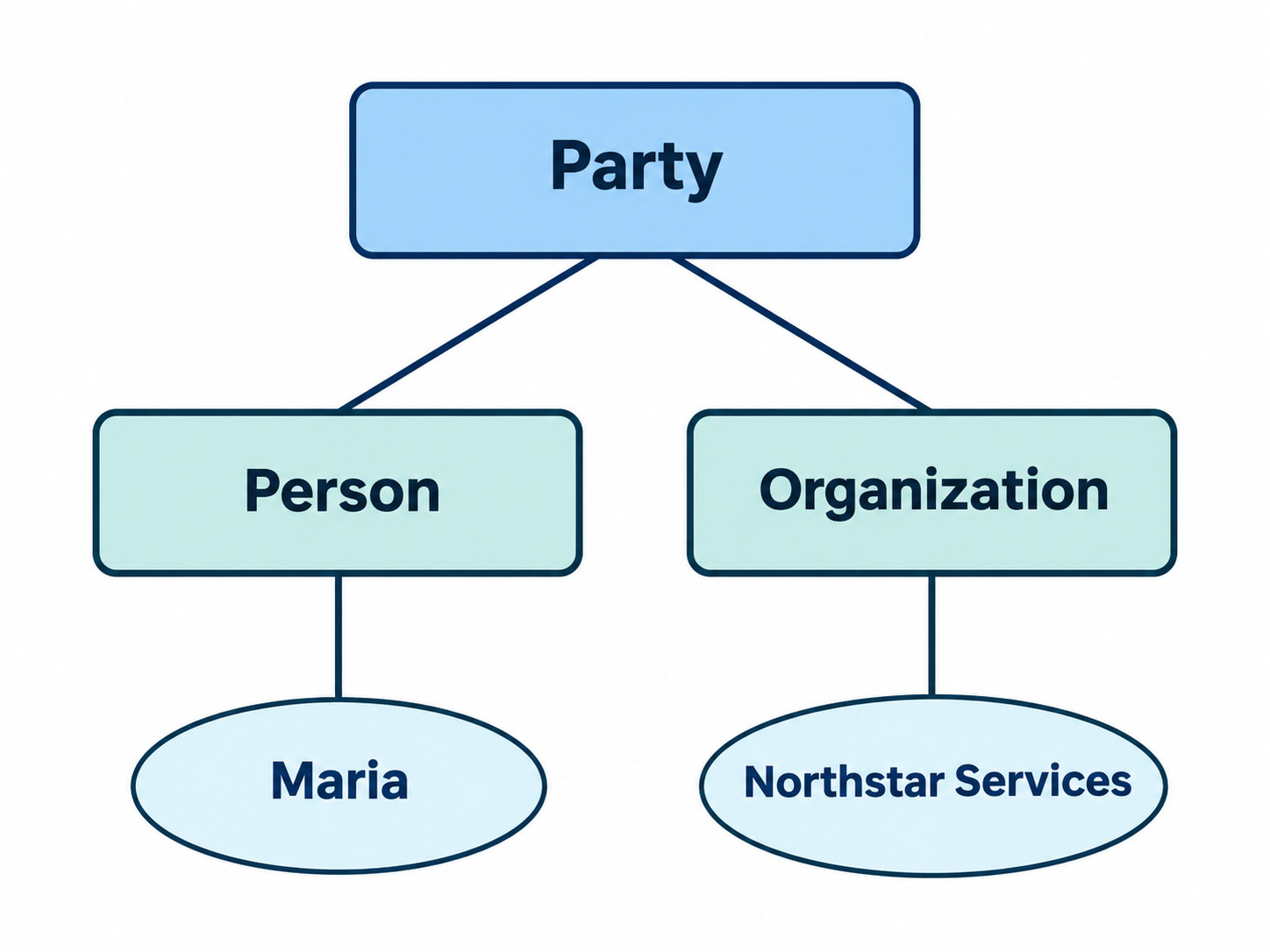
Party gives us a common way to represent identity. It does not mean that people and organizations are identical. A person and an organization have different characteristics and may require different information.
What they share is the ability to participate in the business while retaining their own identity.
Maria does not become a different person because she is both an employee and a customer. Northstar Services does not become a different organization because it is both a supplier and a business partner.
The Party remains the same. What it does can change.
A useful question is:
“Who is the person or organization, apart from the role it is performing right now?”
That question points us toward the Party.
The word Party may sound unusual, especially when Entity is already a familiar term in data modeling. So why introduce another term?


Leave a Reply